Cleaning and Maintaining your LifeStraw EscapeUpdated 7 months ago
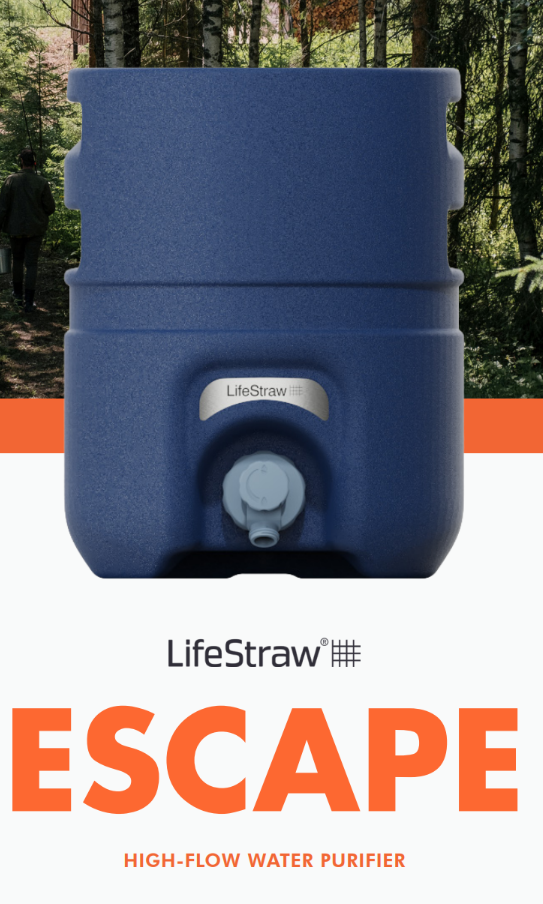 Keeping your LifeStraw Escape clean helps maintain water flow and supports proper filter performance.
Check out YouTube for a complete video series on the Escape.
Before You Begin
LifeStraw Escape is a pressurized device. Only remove or replace the filter, tap, or drain plug when the device is not pressurized. To release pressure, pull the pin on the pressure relief valve.
First Use
Before filtering water for the first time:
- Open the tank by turning the thumb tabs on the orange top lid counterclockwise.
- Rinse the inside of the tank with safe water, then discard that water.
- Unscrew and remove the tap and filter assembly.
- Remove the included activated carbon filter from its packaging and insert it into the carbon chamber.
- Reinstall the filter and tap assembly into the tank.
- Make sure the tap and drain plug are closed.
- Fill the device with up to 5 gallons of water, about 1 inch below the bottom of the top lid opening.
- Reinstall the lid and screw it on tightly by turning clockwise.
- Pressurize the device by pumping the handle up and down.
- For first use, discard roughly the first gallon of filtered water to allow for filter priming.
Routine Cleaning: Backwashing
Backwashing should be done each time you are finished using your purifier before storing it, or anytime you notice a decrease in flow rate. If you are using very turbid water or water with a high amount of debris, backwashing may be needed more often.
How to Backwash
- Fully depressurize the device by pulling the pin on the pressure regulator valve.
- Unscrew the top lid assembly.
- Make sure the filter is completely covered by water by at least 1 inch above the filter.
- Thread the included backwash syringe onto the tap.
- Open the tap.
- Pull back on the syringe plunger to draw water through the syringe.
- Push the plunger to send water back through the tap and filter.
- Repeat this process at least 5 times to remove debris from the ultrafilter.
After Backwashing
- Empty the remaining water from the device by unscrewing the drain plug at the back base of the tank.
- Leave the tank open, without the top lid, so the device can dry internally.
Helpful Tip
If you have backwashed and the flow rate still has not improved, check whether the pre filter is clogged. You can rinse the pre filter by removing the tap assembly, unscrewing the pre filter, and rinsing it with water to remove debris.
Replacing the Activated Carbon Filter
The activated carbon filter with ion exchange lasts up to 600 liters / 158 gallons, or up to 2 months after initial use.
How to Replace It
- Depressurize the device by pulling the pin on the pressure regulator valve.
- Unscrew the tap assembly from the front of the tank to remove both the tap and the filter assembly.
- Disconnect the ultrafilter and prefilter components from the tap.
- Disconnect the carbon chamber from the tap.
- Remove the existing activated carbon filter from the carbon chamber housing and replace it with a new activated carbon filter.
- Dispose of the used carbon filter with regular waste.
- Reassemble the prefilter and ultrafilter to the carbon chamber.
- Reattach the filter to the tap and place the entire tap and filter assembly back into the tank.
- Securely thread the tap onto the body.
Replacing the Ultrafilter Membrane
The ultrafilter membrane lasts up to 18,000 liters / 4,755 gallons.
How to Replace It
- Depressurize the device by pulling the pin on the pressure regulator valve.
- Unscrew the tap assembly from the front of the tank to remove both the tap and filter assembly.
- Disconnect the ultrafilter and prefilter components from the carbon chamber.
- Discard the existing ultrafilter and replace it with a new ultrafilter located behind the activated carbon housing.
- Reassemble the prefilter, activated carbon, and ultrafilter.
- Reattach the filter assembly to the tap and place the entire tap and filter assembly back into the tank.
Storage and Maintenance
Water Storage
We do not suggest storing contaminated water in this device for longer than 2 days.
Short Term Storage
If storing the device for less than 1 month:
- Follow the backwashing procedure after your last use.
- Discard any remaining water in the tank.
- You may leave all filters inside the device.
- Store the tank in a dry environment that will not reach below freezing temperatures.
- Leave the lid assembly off the tank so it can dry.
Long Term Storage
If storing the device for longer than 1 month:
- Complete the backwashing procedure.
- Remove the tap and filter assembly from the tank.
- Disassemble the filters, discard the carbon filter, and drain any remaining water from the tank.
- Reassemble the filter housing with the carbon filter removed and close the tap.
- Fill the tank with roughly 5 gallons of clean water.
- Mix 1 teaspoon of unscented household bleach into the water.
- Reattach the lid assembly and filter about 3 gallons of bleach solution through the unit, leaving the ultrafilter covered in the solution.
- Make sure the filter is covered with at least 1 inch of water above the filter.
- Store in a cool, dry area with the top lid closed.
- Do not store the device in freezing temperatures, as this will damage the filter.
How to Resume Use After Long Term Storage
- Discard all bleach solution in the tank using the drain plug.
- Remove the filter assembly and fully rinse the ultrafilter in safe water for about 1 minute.
- Insert a new activated carbon filter into the carbon chamber.
- Reassemble the full filter assembly and reattach it to the tank.
- Make sure the tap dial is in the closed position.
- Fill the tank with 5 gallons of water.
- Add pressure and filter the entire batch of water out, adding pressure as needed.
- This rinsing process takes roughly 15 minutes.
- Your tank is ready to resume use.
Important Notes
- Do not block or cover the pressure relief valve during use. The device may make a hissing sound when it reaches max pressure. This is normal.
- The device reaches a max pressure limit of 1 bar.
- Do not use the LifeStraw Escape to filter seawater, brackish water, or chemically contaminated water.
- Do not drop the device or expose it to freezing temperatures.